Valbury / US Stock Pocket
Pocket: investing in US stocks without having to pick them
This project shows my work in three areas:
- Product Research
- Product Strategy
- Product Design
- Project
- US Stock Pocket
- Role
- Product Intern
- Duration
- 2 weeks, Sep 2025
- Platform
- Valbury mobile app
- Status
- Launched
(I) Executive Summary
One tap into a whole basket of US stocks
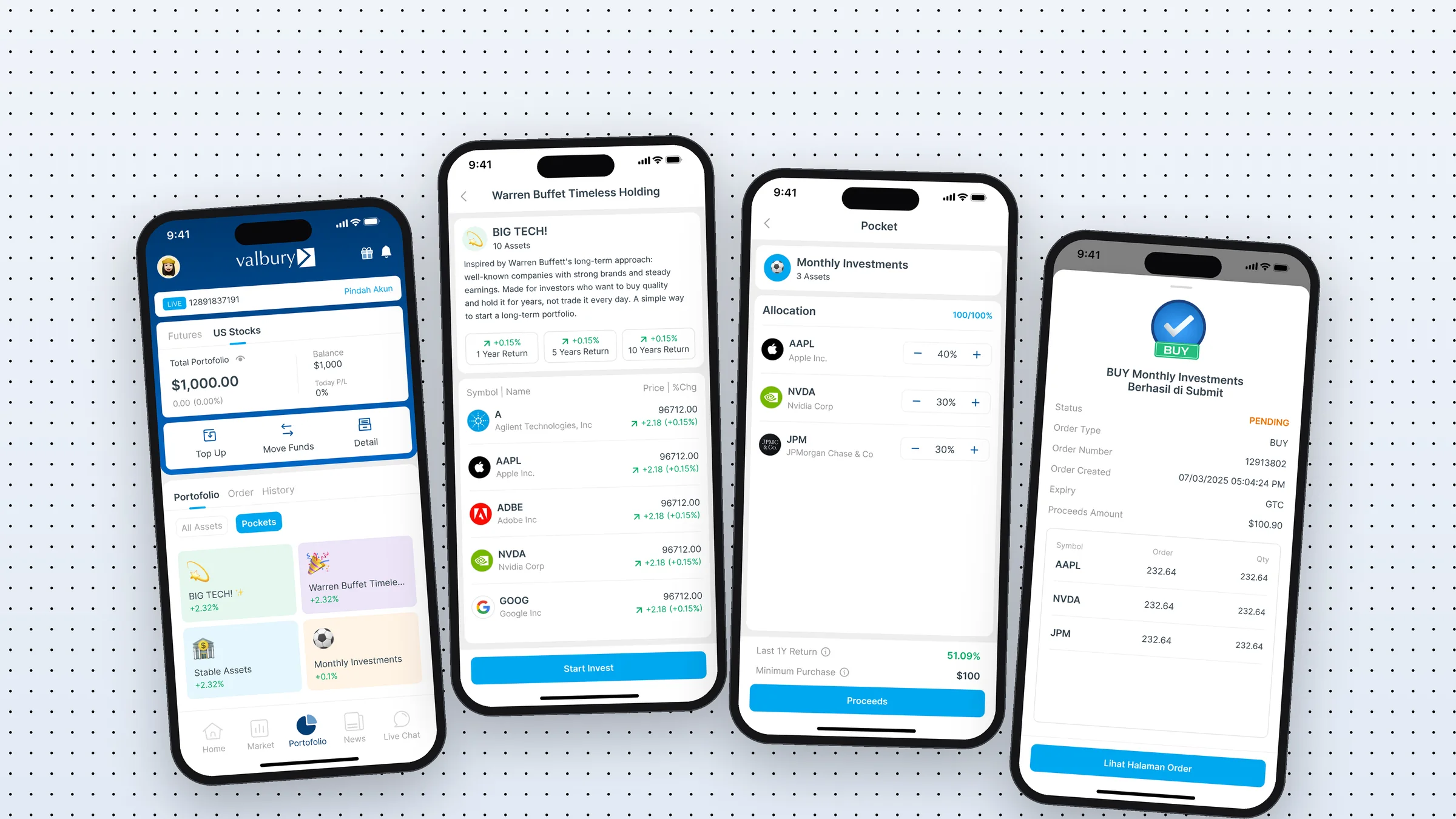
Valbury was adding US stocks to its futures trading app. Many first-time investors want US exposure but get stuck on the first question: which stocks do I buy? Pocket answers it for them. A pocket is a ready-made bundle of US stocks, picked around a theme or a risk level, that you buy in one transaction.
As part of the product team, I:
- Did the competitor research: mapped how four investing apps in Indonesia present stock bundles, and broke down 25 of their bundles, to see what they did well and what Valbury could bring in.
- Turned research into recommendations: counted which stocks appear most across those bundles and proposed three risk-tier pockets.
- Wrote the PRD: personas, user scenarios, must-have features, a go-to-market plan, launch phases and success targets.
- Designed with the team: helped design the whole process, from browsing pockets to buying one, including the “Create New Pocket” flow that lets users build their own.
These efforts resulted in
25 → 3
competitor bundles analysed → risk-tier pockets proposed
2 weeks
from research to PRD to design
Launched
in the Valbury app
Here's how the story unfolds ▼
(II) Context
A futures app, adding US stocks
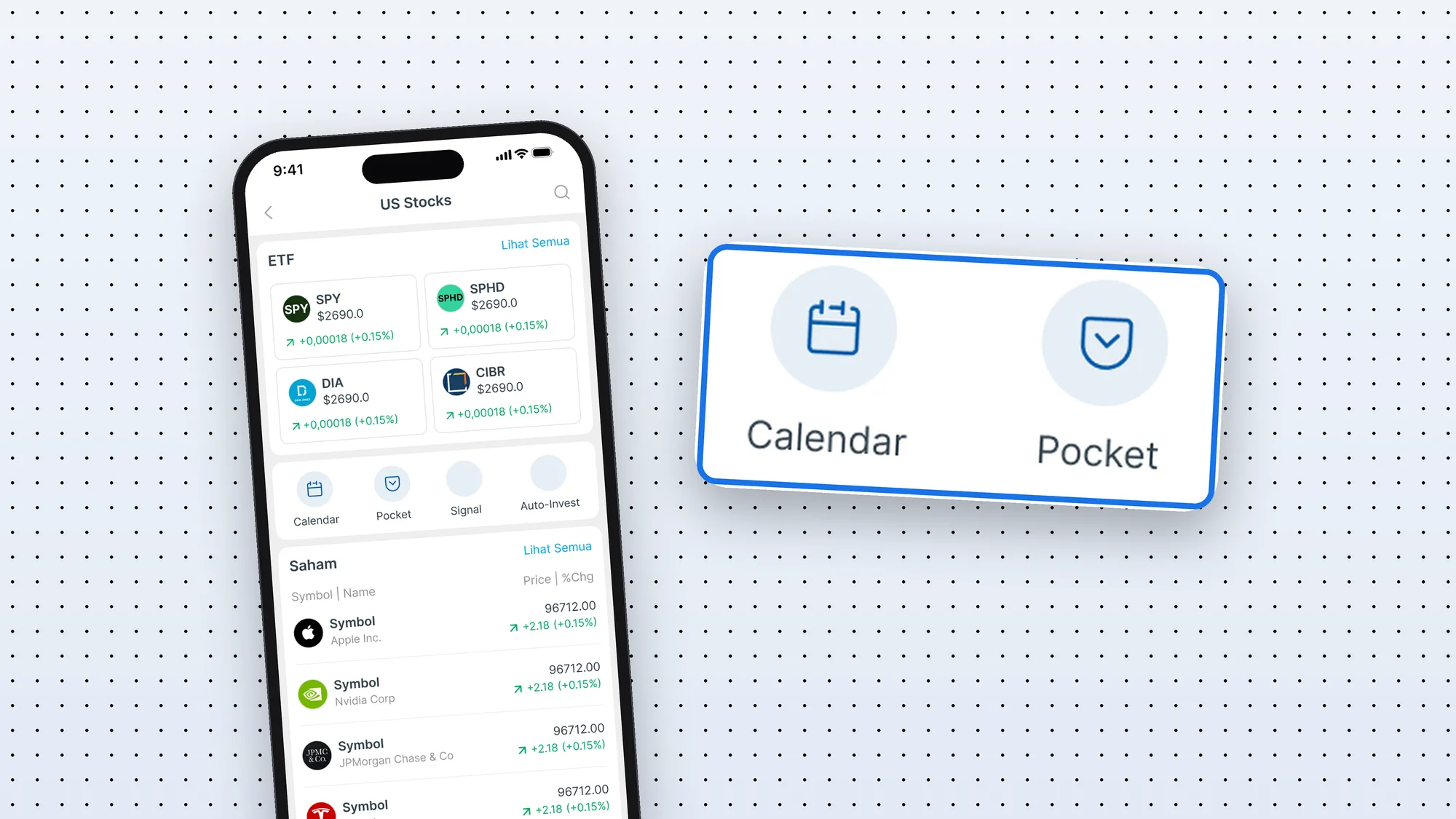
Valbury Asia Futures runs a trading app for futures and forex traders in Indonesia. In late 2025 it was expanding into US stocks and crypto. Pocket was designed as one of the first reasons to try the new US Stocks tab, especially for people who had never bought a US stock before.
(III) The Problem
Wanting US stocks isn't the same as knowing which ones to buy
52.59% of Indonesia's 20.32 million capital-market investors are under 30, and the investor base grew 37% in 2025 alone.
Indonesia's investors are young and new, and many want a piece of the US market. But most don't have the time or knowledge to research individual companies. Investing apps let you trade single stocks, but few offer bundled, themed or risk-based collections.
- Thousands of tickers→beginners freeze→no first purchase
- Diversifying means five separate orders→it feels like work→everything goes into one stock
- Risk explained in jargon→cautious investors don't trust it→they stay out
(IV) Competitor Research
4 apps, 25 bundles, the same 5 stocks everywhere
I did the competitor research on this project: finding out what other investing apps did, and what Valbury could bring in. It had two parts.
The flows. I mapped how four investing apps in Indonesia present stock bundles: where they appear on the homepage, how you browse and buy one, how you top up, and whether you can build your own. The contents. For the two apps with the biggest catalogues, I broke down every bundle, 25 in total: its theme, the stocks inside, how they're weighted, and which returns are shown. Then I counted how often each stock appears.
4
apps' bundle flows mapped
25
bundles broken down
Top 10
stocks by how often they appear
3
risk-tier pockets proposed
- AAPL6
- MSFT6
- NVDA6
- AMZN6
- GOOGL6
- META5
- TSLA5
- PYPL3
- COIN3
- UNH3
- 01
Stories sell, not categories.
Bundles are named after famous investors, institutions and trends, not “Tech Fund 1”.
- 02
The same few stocks carry everything.
Apple, Microsoft, NVIDIA, Amazon and Alphabet each sit in 6 of the 25 bundles.
- 03
Building your own is rare.
Only one of the four apps let people build their own bundle. That gap became our Create New Pocket flow.
(V) Who It's For
Three investors, three reasons to want a bundle
The business wanted a feature competitors don't do well: something that makes US investing simple enough for first-timers, brings investors back to track and buy again, and raises the average transaction size. Investors wanted to own US stocks without researching companies, spread their risk without placing many orders, and understand what they're buying in plain words. The PRD captured them as three personas:
Rina
The Beginner, 25
Marketing executive, new to US stocks
“Too many options. I'm scared of picking wrong.”
Andi
The Diversifier, 34
Tech professional, already in crypto and local stocks
“I don't want to manage ten separate trades.”
Siti
The Cautious Planner, 40
Teacher, investing for her family
“Keep it low-risk, and explain it in plain words.”
(VI) How Might We
From questions to design rules
How might we skip the ticker hunt?
Curated
A few clearly themed pockets, chosen in seconds.
How might we make diversifying one action?
One tap to own
One flow and one confirmation, not one order per stock.
How might we explain risk simply?
Transparent
Every stock, its share and its track record, before you buy.
(VII) Three Risk Tiers
From 25 competitor bundles to 3 risk tiers
The frequency analysis became three starter pockets, one per comfort level:
Stable Growth
- SPY
- AAPL
- MSFT
- JNJ
- WMT
Steady giants in defensive sectors, plus an S&P 500 fund to spread the risk.
Balanced Innovation
- AMZN
- GOOGL
- META
- UNH
- JPM
Tech growth leaders, balanced by healthcare and finance.
High Conviction Future
- NVDA
- TSLA
- PLTR
- COIN
- MSTR
Big bets on AI, EVs and crypto: high growth, high swings.
(VIII) The Buying Flow
Browse, look inside, buy once
We designed the whole process as a team; I brought the research into every screen.
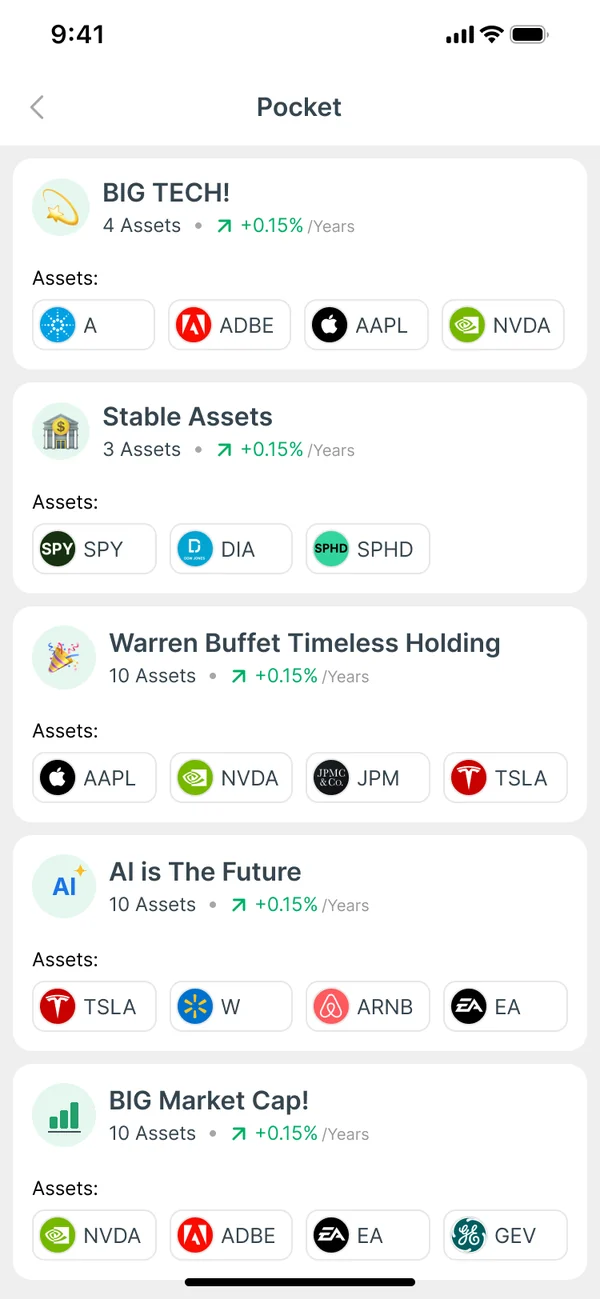
1Compare pockets at a glance
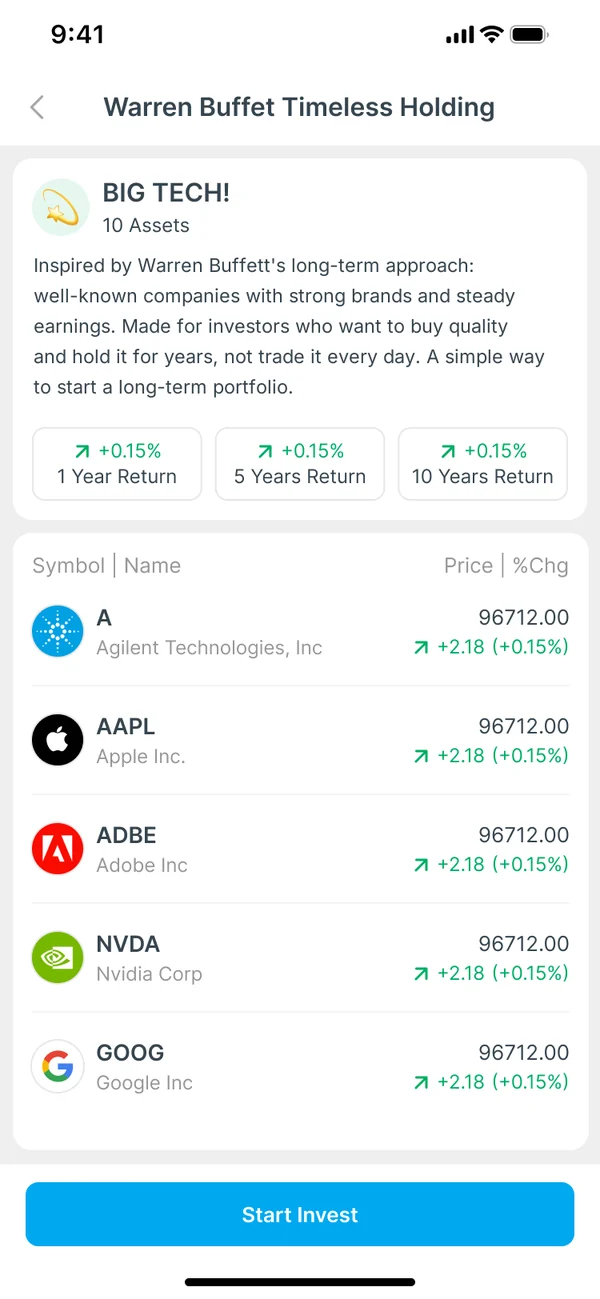
2See what's inside and how it performed
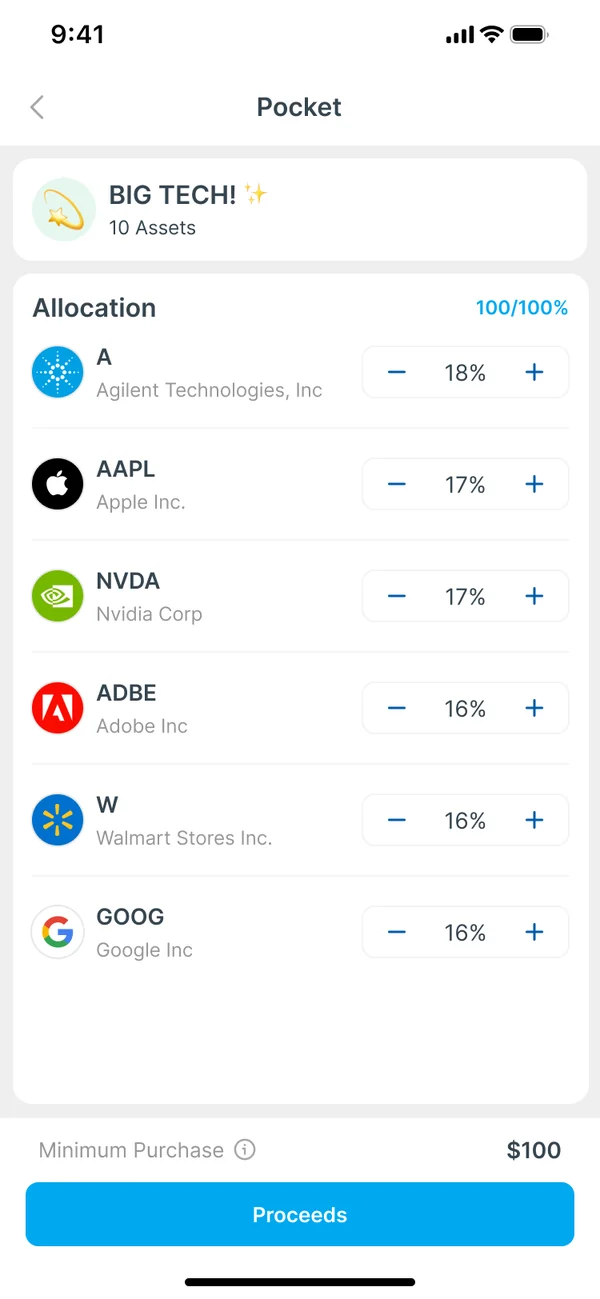
3Check the split before paying
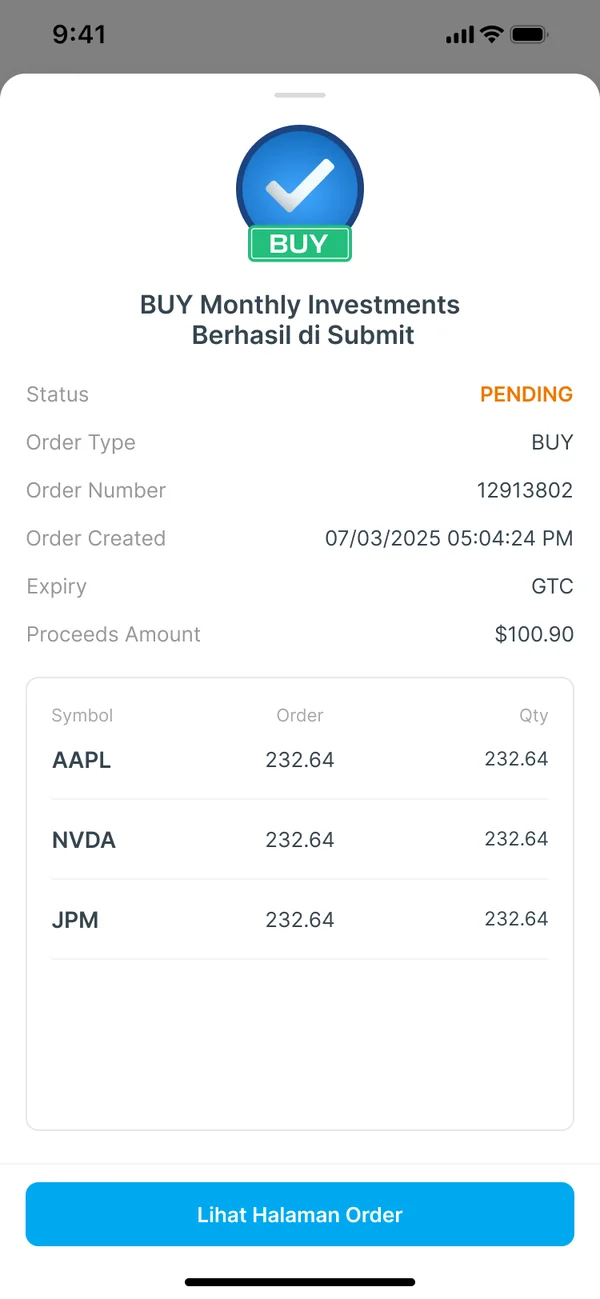
4One confirmation for the whole order
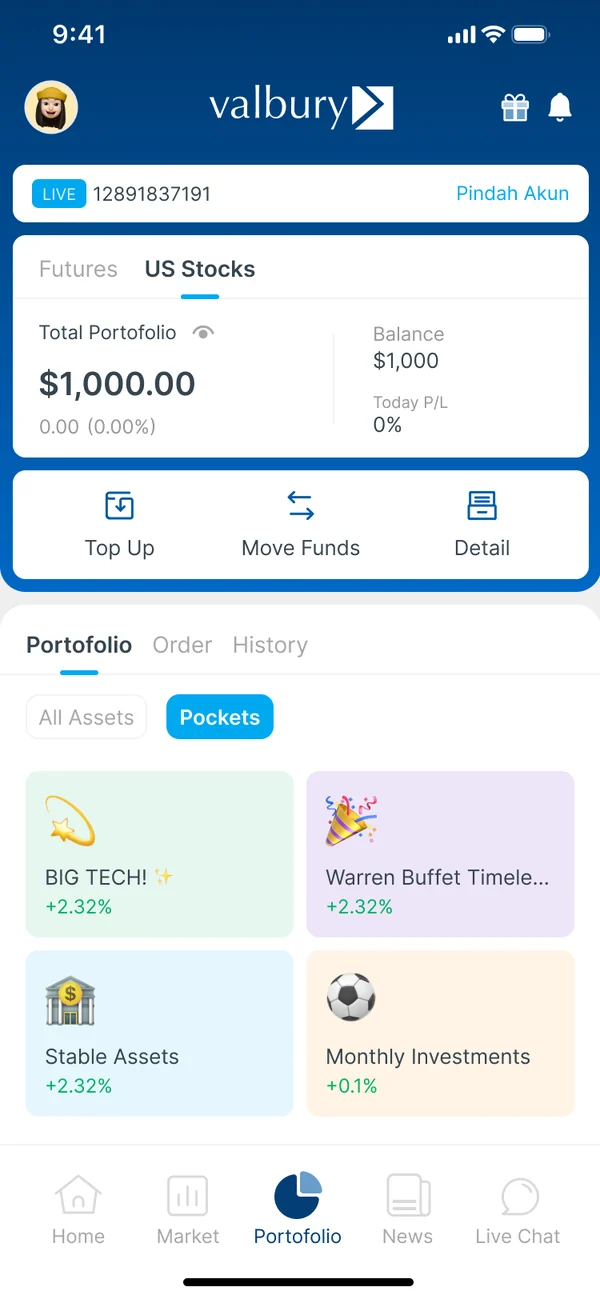
5Track it in your portfolio
(IX) Build Your Own
Build your own pocket
For investors like Andi who know what they want, I designed Create New Pocket: curated pockets for people who don't want to choose, your own for people who do.
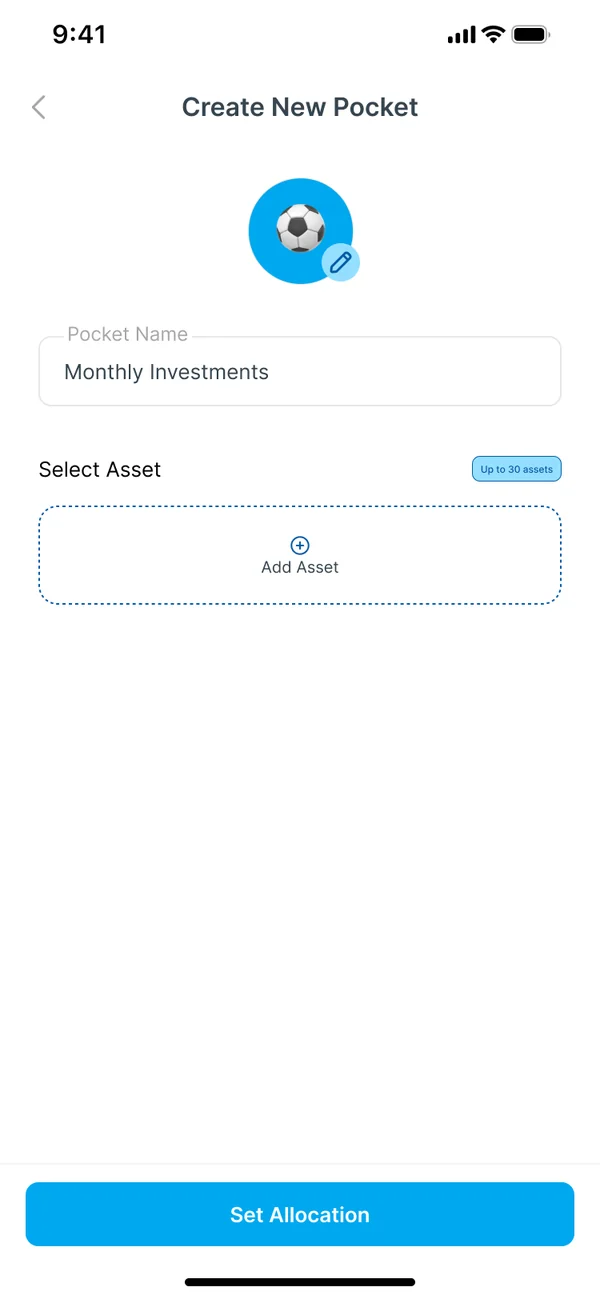
1Name it
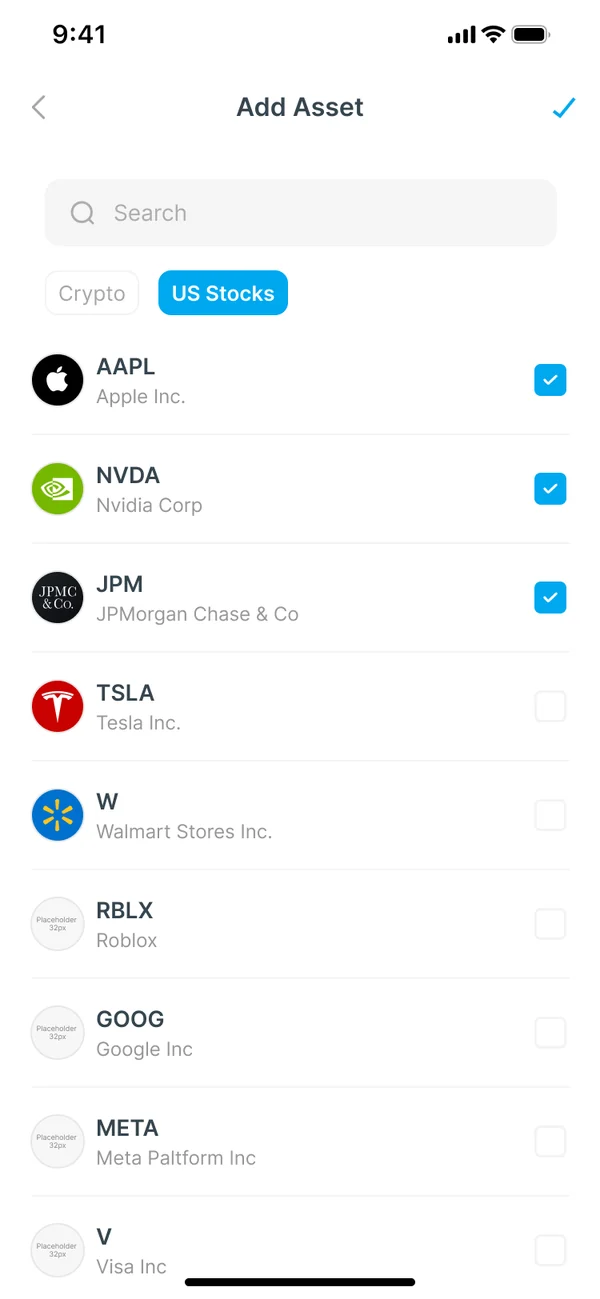
2Pick the stocks
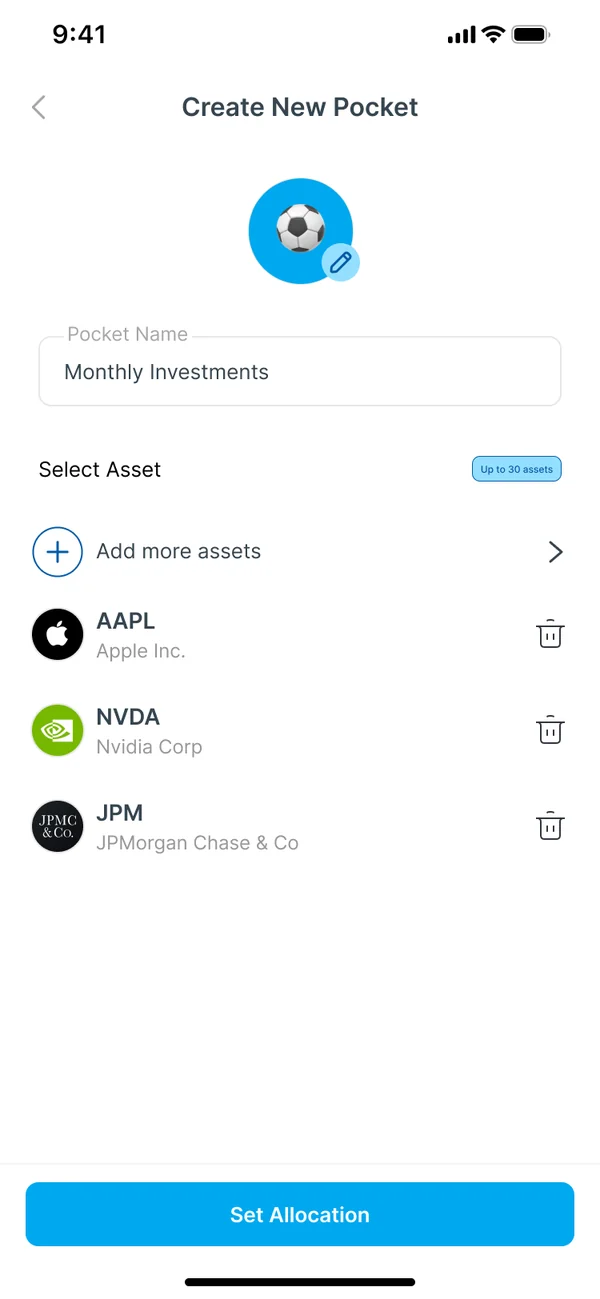
3Review it
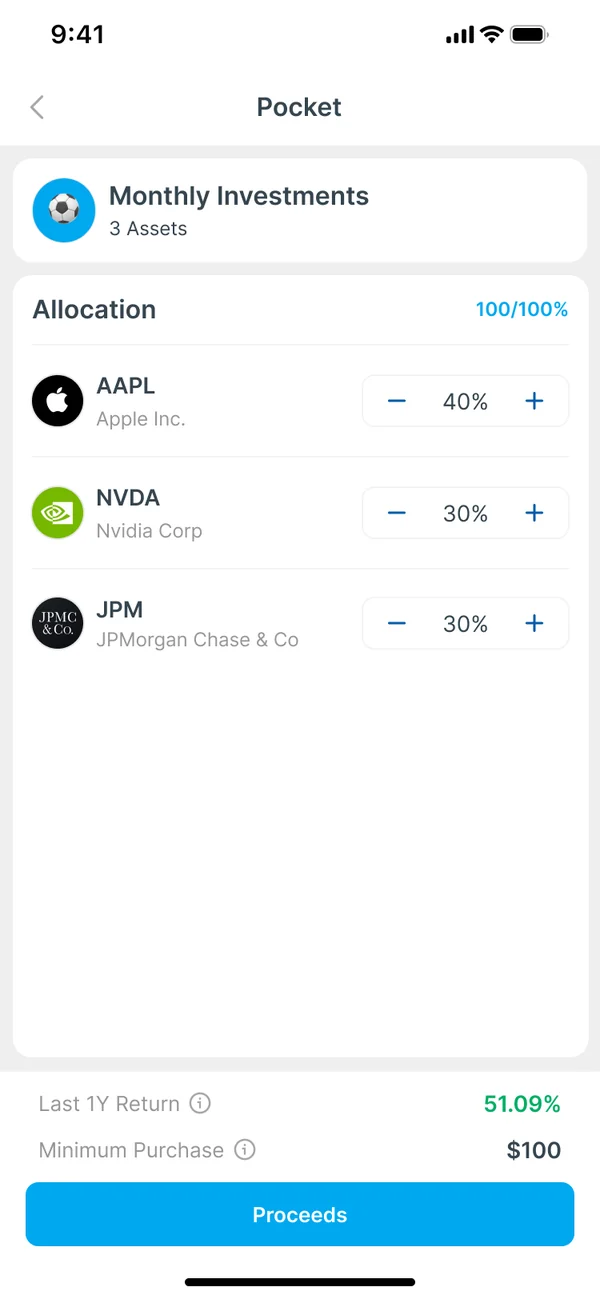
4Set the split and buy
(X) Launch Plan
Start small, then scale
Phase 1
Beta
The most active investors first, to test usability and trust.
Phase 2
Soft launch
Everyone, led by 2–3 pockets with strong appeal.
Phase 3
Scale
More themes, then price alerts and recurring buys.
(XI) Success Metrics
What success looks like
I defined how the team would measure Pocket, across the whole funnel from discovery to revenue:
Targets defined in the PRD
15–20%
of active users own a pocket within 3 months
40%
of pocket buyers buy again within 2 months
+30%
average transaction size vs. single-stock purchases
| Area | Target |
|---|---|
| Adoption | 15–20% of active users buy a pocket within 3 months |
| Engagement | Users check pocket performance 2–3 times a week |
| Discovery | 20%+ click-through from homepage promotions to pocket pages |
| Conversion | Average transaction size 30% higher than single-stock purchases |
| Retention | 40% of pocket buyers buy again within 2 months |
| Revenue | 5% uplift in overall trading volume |
(XII) Reflection
What I learned
- 01
Research should answer a decision.
One benchmark gave us both the stocks for our first pockets and the case for building the feature.
- 02
The hard part of simple is choosing.
Deciding which pockets to launch and how to describe their risk was the real product work.
- 03
Next time, test the names.
Competitors win with memorable themes; we chose clarity. I'd test which earns more trust with real users.
Thanks to Valbury's Sr. UI/UX Designer, Lead Product Manager and VP of Product.